

A luxury swimming pool is more than just a place to swim; it is a centrepiece for relaxation, entertainment, and outdoor living. To keep it looking pristine and operating at peak performance, regular maintenance is essential. One of the biggest concerns for pool owners is algae growth, along with other common water quality and equipment issues. Understanding how to prevent algae and other common pool problems will protect your investment, maintain the pool’s visual appeal, and ensure a safe, enjoyable swimming environment year-round.
Algae are microscopic plants that thrive in warm, still water, particularly when chlorine or sanitizer levels drop below recommended ranges. While not inherently harmful, algae can make the pool slippery, clog filters, and turn the water green, cloudy, or even black, depending on the type.
Preventing algae is much easier than removing it once it takes hold. Here are the most effective strategies:
Balanced water chemistry is your first defence against algae. Regularly test pH, chlorine, alkalinity, and stabilizer levels. For most pools, chlorine should be between 1–3 ppm and pH between 7.2–7.6. Imbalanced water not only encourages algae growth but can also cause skin irritation, equipment corrosion, and reduced sanitizer effectiveness.
Algae thrives in stagnant water. Running the pool pump and filter for at least 8–12 hours a day helps circulate sanitizer throughout the pool, preventing “dead spots” where algae can form. Check that return jets are angled to promote circulation across the entire pool surface and that skimmers are free of debris.

Even with good circulation, algae spores can attach to pool walls, steps, and floors. Brushing these surfaces weekly helps dislodge potential growth before it becomes visible. Vacuuming the pool, manually or with an automatic cleaner, removes debris that could feed algae and other microorganisms.
Shocking the pool means adding a large dose of chlorine or other sanitizer to eliminate contaminants. This should be done after heavy use, following storms, or when chlorine levels have dropped significantly. Shock treatments are especially useful in preventing algae blooms after a hot week or prolonged periods without use.
While not a substitute for proper water balance, an algaecide can provide an extra layer of prevention, particularly during peak summer months. Choose a product compatible with your pool type and follow manufacturer instructions to avoid staining or foaming.

Algae may be the most visible issue, but there are other common pool problems that can impact water quality, safety, and equipment longevity. Staying proactive can help avoid costly repairs.
Cloudy water is often caused by poor filtration, imbalanced water chemistry, or environmental debris. To prevent the water from clouding up, clean and backwash the filter regularly. Make sure to keep sanitizer levels within range, and remove leaves, pollen, and debris promptly.
Hard water or imbalanced calcium levels can lead to white, crusty deposits on tiles and equipment, while metals like copper or iron can cause staining. To avoid this, make sure to maintain calcium hardness between 200 and 400 ppm. Use a sequestering agent if metal levels are high, and test and balance water weekly.
Pumps, heaters, and filters are vital to pool function, and should be maintained regularly to prevent breakdowns. Make sure to inspect the equipment weekly for leaks or unusual noises. It is also important to schedule professional servicing at least once a year, and to keep pump baskets and skimmer baskets clear.
Sunlight and high temperatures can cause chlorine to dissipate quickly. To prevent this, use a chlorine stabilizer (cyanuric acid) within recommended levels. Make sure to keep the pool covered when not in use to reduce UV exposure.
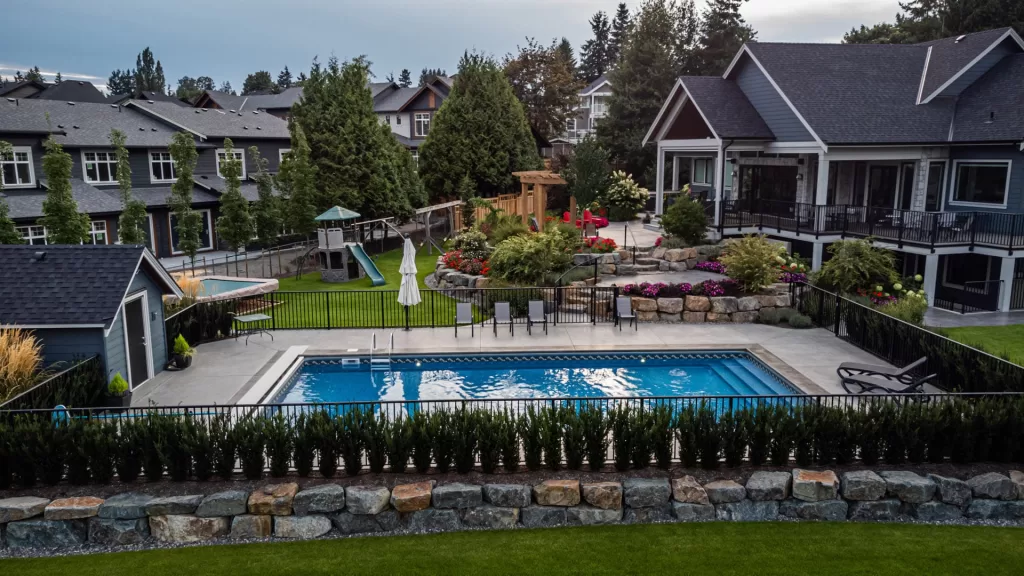
In the Lower Mainland and Fraser Valley, pool care needs vary with the seasons.
While many aspects of pool care can be handled by the owner, professional servicing ensures that problems are caught early and addressed before they escalate. For luxury pools with advanced features like waterfalls, LED lighting, or integrated spas, professional care is especially important to keep systems running smoothly. Experienced pool technicians can:
Owning a luxury pool is a rewarding experience, but it comes with a responsibility to maintain water quality and equipment health. By keeping the water balanced, circulating properly, and free from debris, it is possible to prevent algae and avoid the most common pool problems. A consistent maintenance routine, paired with professional expertise when needed, will keep your pool sparkling, safe, and ready for enjoyment all season long.
At Jovak Luxury Pools, we not only design and build stunning pools and outdoor living spaces, but we also help homeowners protect their investment with guidance and maintenance support. Reach out to us to learn more about proper care for your pool or to schedule a consultation with our expert team.